
Arrest Records in Macon County
An arresting officer creates an incident and arrest report. If the person enters Macon County Jail, corrections staff create a separate booking record, record the received charges, take fingerprints and a photograph, inventory property, and document custody. Reportable fingerprints and arrest data flow to the Illinois State Police Bureau of Identification. The State’s Attorney then decides what to file, and the Circuit Clerk opens the criminal case.
These files update at different times. A booking may exist before a docket opens. The arrest charge may differ from the filed charge, and each filed count may end in dismissal, acquittal, or conviction. That sequence is why a single name search cannot supply a complete Macon County arrest history.
Four Macon County Arrest Records
The first file is the arresting agency’s report, which can include probable cause, the alleged offense, time and place, officer, witnesses, property, and transport. The jail’s booking file adds custody facts. The court docket records filed charges and outcomes. ISP connects reportable arrest cycles with qualifying dispositions in the state repository.
Record flow: Agency Report › Jail Booking › Circuit Court Case › ISP Repository
A missing item at one stage does not erase the others. When a state response lacks a known disposition, a person reviewing their own history should use ISP Access and Review to seek correction.
Missing Macon County Custody Entries
If a person vanishes from the current-inmate list, call Corrections before drawing a conclusion. Release, transfer to IDOC, movement to another facility, or a data correction can all remove a current entry. Ask for present custody status and the proper request route. Then use the court case number, if one exists, to check whether a hearing or release order explains the change.
HomeWAV is the jail’s communication system, not an arrest-history database. An account may support contact with someone now held, but it does not prove the arrest facts or show the court outcome.
Macon County Arrest Lookups
No single official county page supplies a complete historical arrest archive. Use the channel that matches the question, then move through the fallback chain.
- Identify the arresting agency and approximate event date or location.
- Check the sheriff’s Current Inmate Information link, or call Corrections at 217-424-1341.
- Request the arrest or incident report from the agency that created it.
- Search Judici after filing to read charges and each count’s outcome.
- Use CHIRP for public Illinois conviction information, or fingerprint Access and Review for your own record.
- If nothing appears, check spelling, timing, county, restrictions, and pre-1989 clerk files.
For Decatur incidents, Citizen Connect can help identify an approximate case number. It posts current-day data the next day, shifts or suppresses exact addresses, and omits sensitive calls. It is a discovery map, not the report or a court docket.
Which Macon Agency Holds It
Send a request to the creator. Macon County Sheriff records handle sheriff reports and Forsyth contract-deputy reports. Decatur Police and Mount Zion Police each have a separate municipal FOIA route. ISP handles its own records. Jail custody remains with the sheriff even when a city officer made the arrest.
| Arresting agency | Records route | Core contact |
|---|---|---|
| Macon County Sheriff | Sheriff Records or FOIA, 333 S. Franklin | 217-424-1323 reports; 217-424-1321 records |
| Decatur Police | DPD police FOIA form, email, mail, or counter | 217-424-2711 |
| Mount Zion Police | MZPD police FOIA | 217-864-4012 |
| Forsyth contract deputies | Macon County Sheriff, not Village Hall | 217-424-1321 or 217-424-1323 |
| Illinois State Police | ISP FOIA or crash channel | Use official ISP contact routing |
Requests should describe an existing record, give the event date and report or booking number when known, and ask for electronic native format when suitable.
Arrest Records: What They Contain
The releasable fields vary with the source and any active-investigation, privacy, juvenile, safety, or confidential-source exemption. The agency may redact part of a file instead of withholding all of it.
| Incident identity | Report number, date, time, location, and arresting agency. |
|---|---|
| Person descriptors | Name and lawful identifiers, subject to privacy limits. |
| Allegation | Received charge, statute, probable-cause narrative, and warrant reference. |
| Booking | Booking number and time, fingerprints, presented charges, and custody status. |
| Property and evidence | Inventory, vehicle, or evidence fields, with protected facts removed. |
| Release path | Citation, custody receipt, release, discharge, or transfer timing. |
The court record adds attorneys, judge, filed counts, plea, findings, sentence, and costs. Those are not booking fields.
Macon’s 72-Hour Arrest Data
Illinois FOIA, 5 ILCS 140/2.15, requires agencies to make listed arrest information available within 72 hours. The enumerated material includes name, age, address, photograph when available, charges, arrest time and place, arresting agency, and custody receipt, discharge, or transfer timing. This prompt-release rule does not turn a full investigative file into an open document.
Section 7 still permits focused redaction for law-enforcement needs, personal privacy, safety, confidential sources, juvenile matters, and other protected categories. Ask the official agency whether a booking photograph is available. Never substitute a commercial mugshot source for an unavailable or withheld government image.
Decatur Police FOIA Route
Decatur accepts police-record requests through a web form, printable form, another written request, mail, email, or in-person delivery at the police department. Since January 1, 2026, emailed request text must appear in the email body. The city says it need not open an attachment or link. The first 50 standard pages are free, then pages may cost $0.15 each; unusual media costs actual production.
The Decatur FOIA page explains the request rules and the newer email safeguard.

Putting the incident date, location, case number, and desired record in plain text helps route the request without an attachment.
The Decatur Police web request form provides a direct online alternative.
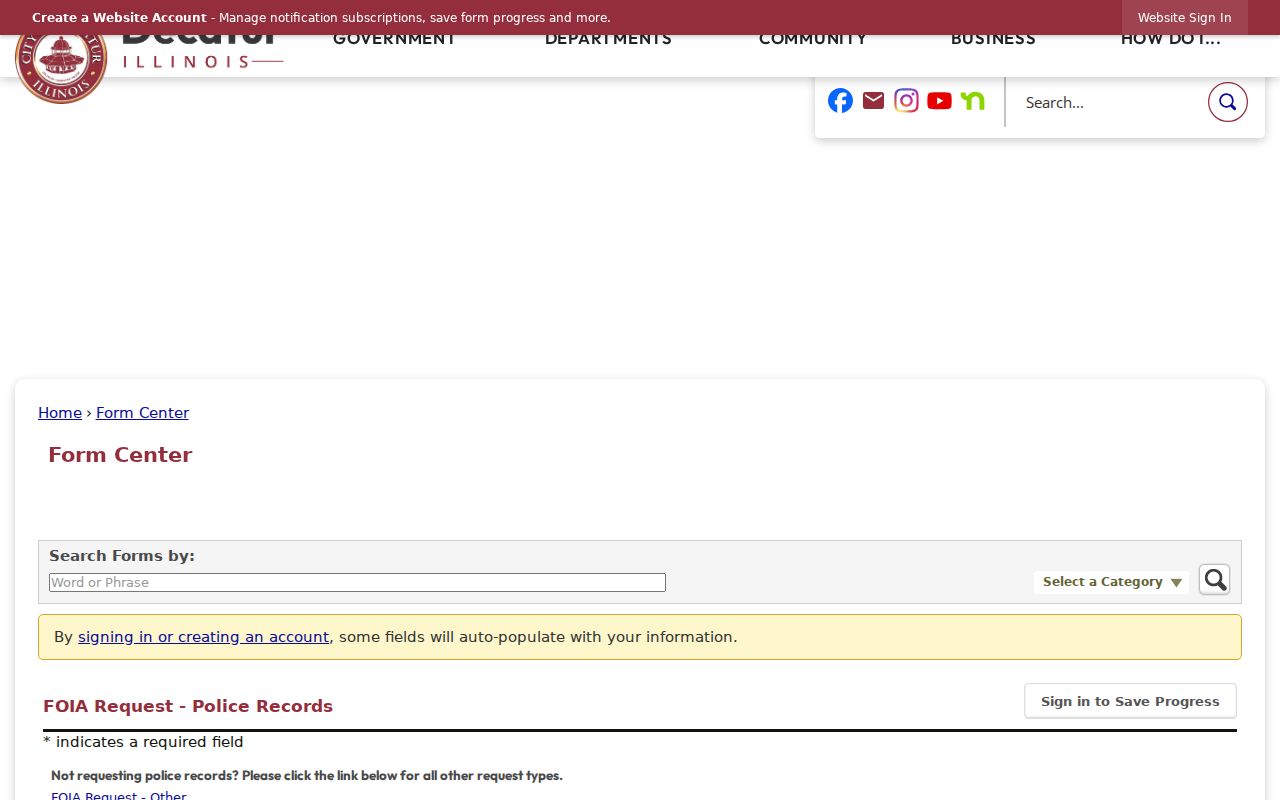
The form collects requester contacts, delivery choice, record details, and a date range, but submitting it does not guarantee release of protected material.
Recent Macon County Bookings
The sheriff’s official Current Inmate Information link points to a bare HTTP address. Some modern browsers may block it. No separate official booking-log interface or public historic roster was found. When the link fails, call Macon County Corrections at 217-424-1341. The sheriff lists that line as staffed 24 hours. In-person custody questions go to the Law Enforcement Center at 333 S. Franklin Street in Decatur.
The roster concerns present custody, not a full arrest archive. A person may disappear after release, transfer, or data correction. That change does not show whether charges were filed or how they ended. Historical booking requests go through sheriff FOIA with the name, arrest date, and booking or report number when known.
Macon County Sheriff Records
333 S. Franklin Street
Decatur, IL 62523
Records: 217-424-1321
Reports: 217-424-1323
Corrections: 217-424-1341
foiainformation@sheriff-macon-il.us
Mount Zion Arrest Requests
Mount Zion Police has its own FOIA officer and form. Requests may go to Joann Maulding, Police FOIA Officer, at 410 W. Main Street or P.O. Box 49, Mount Zion, Illinois 62549, by fax at 217-864-4130, or by email at j_maulding@mtzion.com. The form asks for detailed report information and government ID at pickup. The first 50 pages are free and later standard pages are $0.15 each.
The Mount Zion police FOIA page separates police requests from village records.
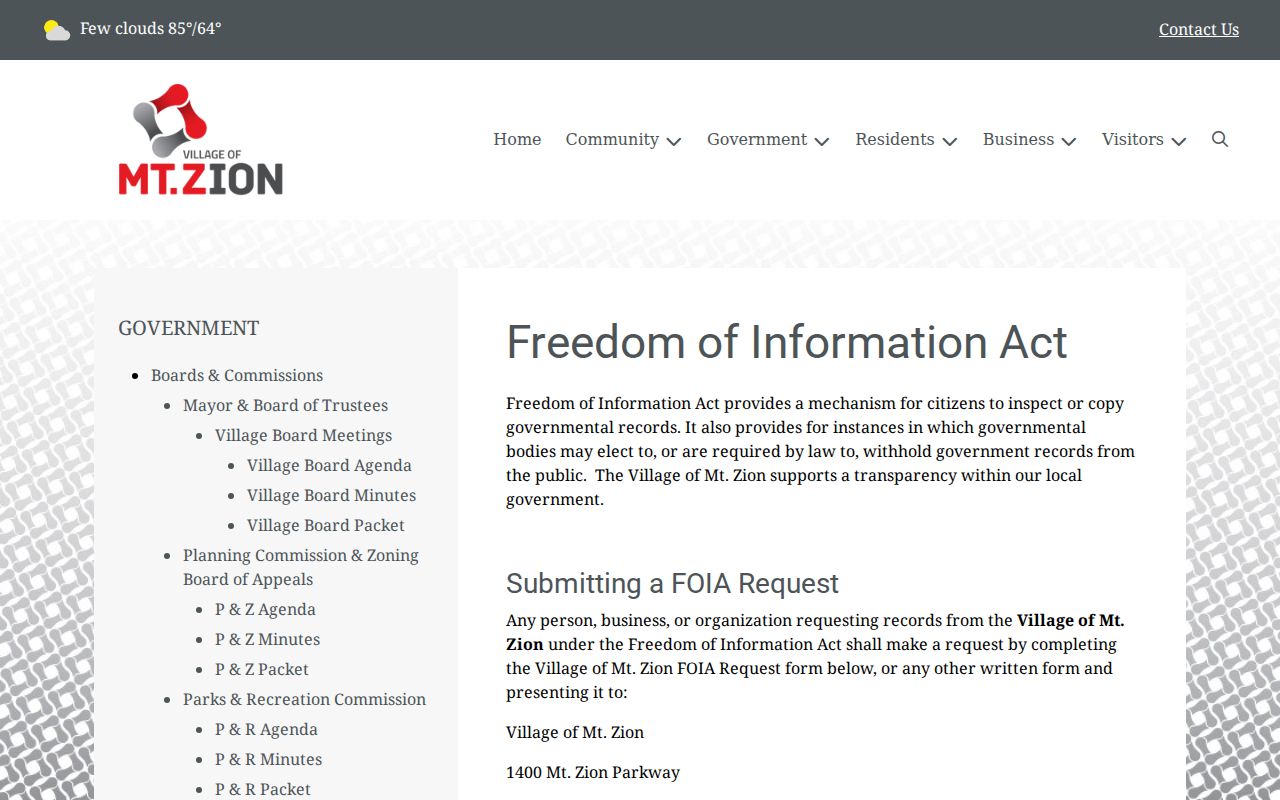
If detention followed the arrest, Macon County Jail still holds booking and custody information, while the Circuit Clerk holds the filed case.
Decatur Arrest Numbers in Context
Decatur reported 5,212 criminal arrests in its 2025 annual report, along with 50,697 service calls, 6,726 traffic citations, 219 DUIs, and nine homicides. That total measures police activity, not unique convictions. One incident can include more than one offense, and a later court outcome must be checked separately.
The official crime-statistics hub explains the change from older UCR hierarchy counting to NIBRS, which can count multiple offenses in one event.
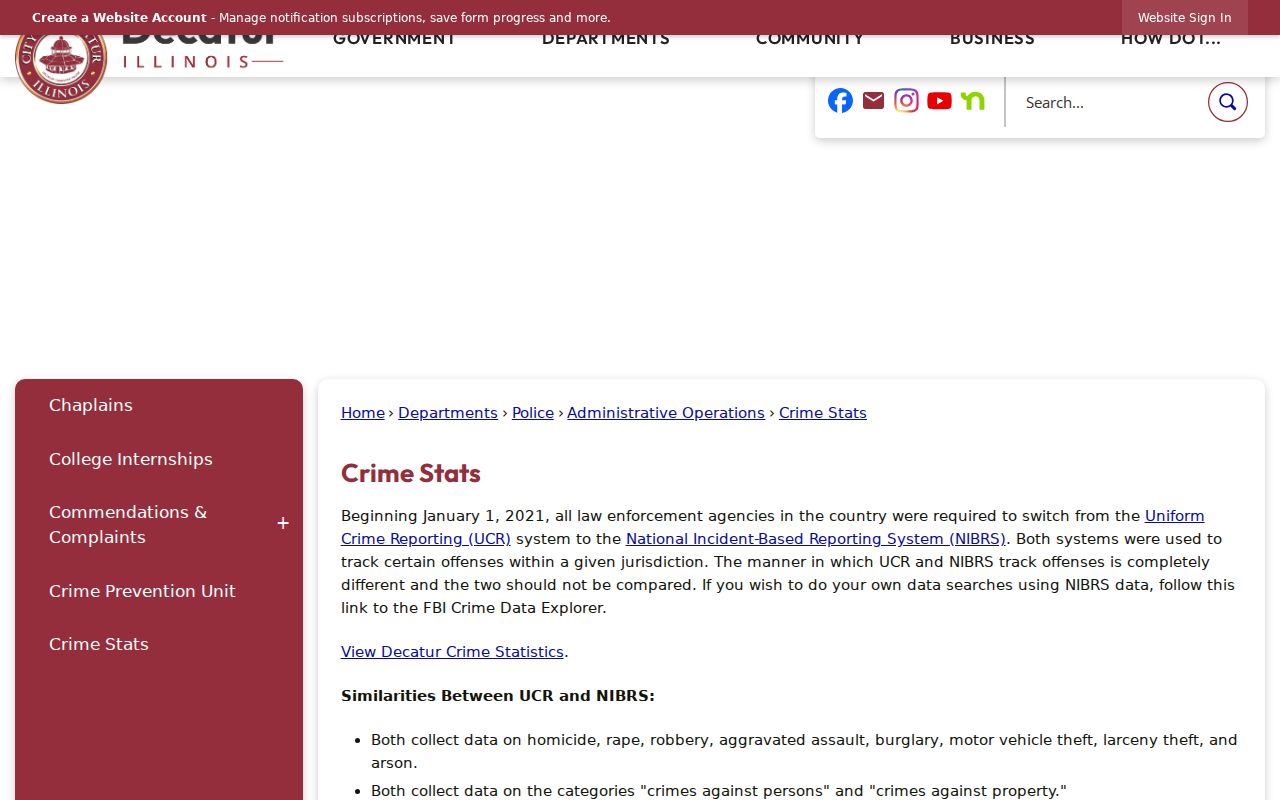
Year, measure, and counting method all matter when comparing Macon County arrest totals.
Illinois Arrest History Channels
CHIRP supports Uniform Conviction Information Act inquiries. ISP lists electronic name inquiries at $10, paper name inquiries at $16, electronic fingerprint UCIA inquiries at $15, and paper fingerprint-card inquiries at $20. CHIRP requires a State of Illinois Digital ID or account, and some functions are limited to law enforcement or organizations with an ISP agreement.
The ISP fee schedule is the source to check before submitting an inquiry.
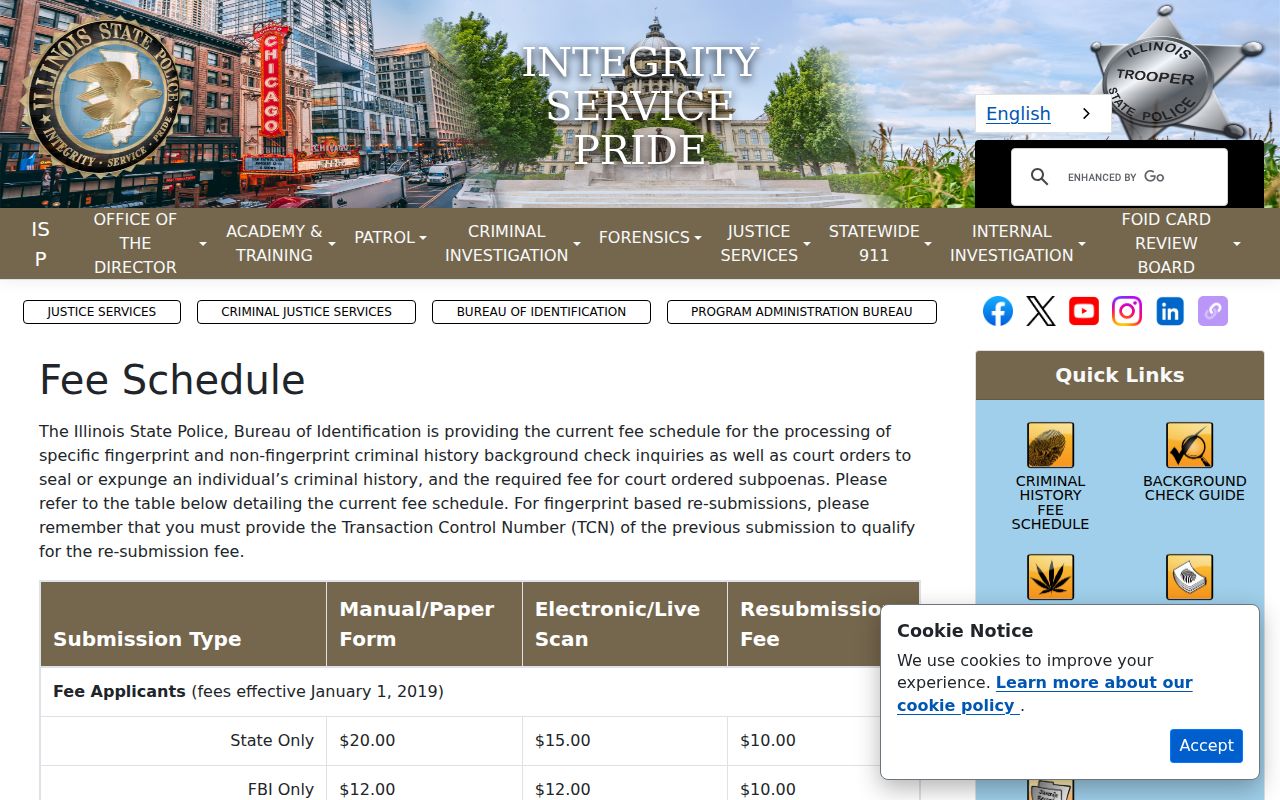
A UCIA public product reports Illinois conviction information. People reviewing their own more complete state record use fingerprint Access and Review, and any collection charge comes from the approved fingerprint vendor.
Arrest Records vs Conviction Records
The distinction is both legal and practical. An arrest shows that an agency took official action based on an allegation. A conviction follows a guilty plea or adjudication in court. Many arrests do not become convictions.
| Arrest record | Conviction record |
|---|---|
| Created by police, sheriff, or jail | Created through the court judgment |
| Shows allegation, arrest, or booking | Shows a finding of guilt |
| Lives with agency and custody records | Lives with clerk and state repository |
| May end with release or no filed case | May lead to sentence, appeal, or sealing |
Note: An arrest is not proof of guilt, and the filed case may end in dismissal or acquittal.
For charges, pleas, and final outcomes, move from the arrest file to the Macon County court case lookup. Qualifying events may later be eligible for expungement or sealing, but only after a court order and agency implementation.